
训练3 3dconv神经网络失败,损失在.6931收敛
我编写了一个脚本来训练神经网络使用.nii文件作为输入,使用来自TensorFlow这里的https://www.tensorflow.org/tutorials/load_data/images教程。我稍微修改了它,以处理NiBabel和.nii文件,但它仍然遵循相同的基本结构。然而,我遇到了一个问题,我的损失收敛到0.6931,我假设这是因为模型开始猜测相同的事情,不管输入,图像形状或批处理大小。因此,我相信这个模式并不是学习。有人能识别出我的代码中有什么致命的缺陷吗?我已经累了:
使用不同的优化器和丢失functions
- Using (简单、密集、密集的模型)更改LR
- 、清理数据和重组数据的
- 回调(
- ),改变每个类
- 数量的比例,但这似乎不起作用,因为它甚至不想开始training
- Using重复数据集和固定大小(虽然我不清楚这有什么不同)
F 214
# Gets the label of the image, the label determines how tensorflow will classify the image
def get_label(file_path):
    # Convert the path to a list of path components
    parts = tf.strings.split(file_path, os.path.sep)
    # The fourth last is the class-directory
    return float(parts[-4] == "class1")


# Reads the data from a .nii file and returns a NumPy ndarray that is compatible with tensorflow
def decode_img(img):
    img = nib.load(img.numpy().decode('utf-8'))
    # convert the compressed string to a NumPy ndarray
    data = img.get_fdata()
    # Resize img
    data = np.resize(data, imgshape)
    # Normalize
    max = np.amax(data)
    min = np.amin(data)
    data = ((data-min)/(max-min))
    return data


# Processes a path to return a image data and label pair
def process_path(file_path):
    # Gets the files label
    label = get_label(file_path)
    img = decode_img(file_path)
    return img, label
我使用这些函数来处理我的数据,并将它映射到我的列表文件数据集上来处理我的数据。
def configure_for_performance(ds):
    #ds = ds.cache(filename='cachefile')
    ds = ds.cache()
    ds = ds.shuffle(buffer_size=1000)
    ds = ds.repeat()
    ds = ds.batch(BATCH_SIZE)
    ds = ds.prefetch(buffer_size=tf.data.experimental.AUTOTUNE)
    return ds
我直接从TensorFlow教程中获得了这个结果。
# Create a sequential network
model = tf.keras.Sequential([
    tf.keras.layers.Convolution3D(
        4, 4, padding='same', data_format="channels_last", input_shape=imgshape, activation='tanh'),
    tf.keras.layers.MaxPooling3D(padding='same'),
    tf.keras.layers.Dropout(0.2),
    tf.keras.layers.Convolution3D(4, 4, padding='same', activation='tanh'),
    tf.keras.layers.MaxPooling3D(padding='same'),
    tf.keras.layers.Dropout(0.2),
    tf.keras.layers.Convolution3D(4, 4, padding='same', activation='tanh'),
    tf.keras.layers.MaxPooling3D(padding='same'),
    tf.keras.layers.Dropout(0.2),
    tf.keras.layers.Convolution3D(4, 4, padding='same', activation='tanh'),
    tf.keras.layers.MaxPooling3D(padding='same'),
    tf.keras.layers.Dropout(0.2),
    tf.keras.layers.Flatten(),
    tf.keras.layers.Dense(2048, activation='tanh'),
    tf.keras.layers.Dense(1024, activation='tanh'),
    tf.keras.layers.Dense(512, activation='tanh'),
    tf.keras.layers.Dense(256, activation='tanh'),
    tf.keras.layers.Dense(1, activation='sigmoid')
])
model.compile(optimizer='adam',
              loss=tf.keras.losses.BinaryCrossentropy(from_logits=True),
              metrics=['accuracy'])
model.summary()
model.fit(
    train_ds,
    validation_data=val_ds,
    epochs=500,
    steps_per_epoch=BATCH_SIZE,
    validation_steps=BATCH_SIZE
)
这是我的模型,我使用3 2dconv,类似于2 2dconv在常规图像分类中的使用。
如有任何建议,将不胜感激!
回答 2
Stack Overflow用户
发布于 2020-08-29 02:21:08
您的获取图像的代码看起来不错,但是我无法亲自测试它,因为我不确定您的数据是如何存储的。此外,您的模型将开始培训的事实表明,错误可能不在这里。如果要确保可以使用matplotlib来显示图像,请确保它们正确加载。
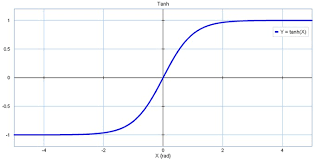
首先,我会让你的模型尽可能简单,并且仍然有效,测试它是否仍然收敛到0.6931或其他一些数字。然后尝试使用不同的激活函数(即relu )。另一种方法可能是使用一些批量正常化。我的理论是,在tanh函数中有很大或很小的值,这导致每次输出接近0或1。这也阻止了进一步的训练,因为有一个很小的梯度训练。更改为relu可以绕过这个问题,因为值很大,但可能不是很小的值。使用批量规范化将使您的值远离极限,在那里,tanh输出仅为0或1。
Stack Overflow用户
发布于 2020-08-29 09:30:10
如果您一直收敛到完全相同的损失,那么在我的经验中只有一个解释--您对数据加载器进行了错误的编码。正在发生的是图像和标签不匹配。它试图学习纯粹的随机性。在这种情况下,它只需尽最大努力输出“平均”正确的答案。我怀疑0.69的值来自你的数据标签,比如你有69%的1级和31%的0级。
https://stackoverflow.com/questions/63642687
复制相似问题
腾讯云开发者

Copyright © 2013 - 2026 Tencent Cloud. All Rights Reserved. 腾讯云 版权所有
深圳市腾讯计算机系统有限公司 ICP备案/许可证号:粤B2-20090059  粤公网安备44030502008569号
腾讯云计算(北京)有限责任公司 京ICP证150476号 | 京ICP备11018762号