Spring的启发
原创

命名
Spring在它的问题域内,通过准确的命名区分定义了不同的领域概念,我们在开发时可以多多借鉴参考
- 拦截器:XxxInterceptor,比如HandlerInterceptor
- 处理器:XxxProcessor、XxxHandler,比如BeanPostProcessor
- 解析器:XxxResolver、XxxParser,比如PropertyResolver、BeanDefinitionParser
- 访问器:XxxAccessor,比如PropertyAccessor
- 适配器:XxxAdapter,比如HandlerAdapter
- 组合器:CompositeXxx,比如CompositeHandlerAdapter
- 转换器:XxxConverter,比如DateToInstantConverter
- 评估器:XxxEvaluator,比如ConditionEvaluator,语义同 Predicate.evaluate() 方法
- 工厂:XxxFactory,比如BeanFactory
- 源:XxxSource,比如PropertySource
- 上下文:XxxContext,比如ApplicationContext
- 注册中心:XxxRegistry,比如BeanDefinitionRegistry
- 配置中心:XxxConfiguration
- 读写分离接口:Xxx 和 ConfigurableXxx,比如ApplicationContext, ConfigurableApplicationContext
- 可读接口:XxxCapable,比如EnvironmentCapable
- 可写接口:XxxAware,比如ApplicationContextAware
- 事件侦听:XxxEvent、XxxListener、XxxEventPublisher
- 工具类:XxxUtils、XxxHelper
设计模式和设计原则的应用
从上面的命名中也可以看见Spring运用了大量的设计模式和设计原则,这里着重提及一二。
极具扩展性的拦截器
拦截器应用广泛,扩展性强。先看下Spring的HandlerInceptor定义:
public interface HandlerInterceptor {
    // handler执行前操作
    default boolean preHandle(HttpServletRequest request, HttpServletResponse response, Object handler) throws Exception {
        return true;
    }

    // handler执行后操作
    default void postHandle(HttpServletRequest request, HttpServletResponse response, Object handler, @Nullable ModelAndView modelAndView) throws Exception {
    }

    // handler执行完成后操作
    default void afterCompletion(HttpServletRequest request, HttpServletResponse response, Object handler, @Nullable Exception ex) throws Exception {
    }
}
应用拦截器一般如下(实际调用逻辑参考HandlerExecutionChain类):
public class Business {
    private Interceptor[] interceptors;

    public void handleBusiness(BusinessContext context) {
        interceptors.forEach(interceotpr -> interceotpr.preHandle(context));
        Result result = action();
        interceptors.forEach(interceotpr -> interceotpr.postHandle(context, result));
    }
}这里可以看到,通过拦截器我们可以把核心业务逻辑与扩展业务逻辑拆分开来,对于Spring MVC而言,处理request的handler是它的核心业务逻辑,扩展业务逻辑像鉴权、日志、request header校验、限流等等都可以放在Interceptor中。
- 从可读性上来说,理清并拆分核心业务逻辑与扩展业务逻辑,有助于核心业务逻辑的干净清晰。
- 从扩展性上来说,扩展逻辑的改动只需添加一个Interceptor就好,符合开闭原则,比如业务逻辑完成后发送一条kafka消息,就可以加一个Interceptor实现postHandle。
其他一些例子:
- Spring的BeanPostProcessor也是interceptor,@Autowire注解的支持就是通过AutowiredAnnotationBeanPostProcessor来扩展实现的。
- Tomcat的Filter、Dubbo的Filter,具体的实现方式各稍有不同,但都是interceptor模式,同样在鉴权、校验等方面有诸多用途。
接口隔离
Spring对不同的业务概念定义了不同的接口,一个接口下可能会对应多个不同的实现类,比如读写分离的接口设计ApplicationContext和ConfigurableApplicationContext:
public interface ApplicationContext extends EnvironmentCapable, ListableBeanFactory, HierarchicalBeanFactory, MessageSource, ApplicationEventPublisher, ResourcePatternResolver {

    String getApplicationName();

    ...  // 省略
}

public interface ConfigurableApplicationContext extends ApplicationContext, Lifecycle, Closeable {

    void addBeanFactoryPostProcessor(BeanFactoryPostProcessor postProcessor);

    void refresh() throws BeansException, IllegalStateException;

    ...  // 省略
}
Java开发者最频繁接触到的应该就是Spring框架了,平时开发中就可以多进入源码中翻翻看看,有助于培养良好的代码风格。
注意接口的使用有个常见的误区:无脑先定义一个接口后,再写一个对应的实现类,尽管实际上并没有多态的需求。这种代码形式常见于Spring MVC分层架构里,比如定义接口XxxService,然后一对一配对实现XxxServiceImpl。大量一对一的接口和实现类反而带来很多无效的工作量,没什么意义。相反,应该采取的方法是:1. 有深入的业务知识并且仔细思考后自上而下地定义好业务接口 2. 持续重构,按业务发展的需要自下而上地创建良好的业务接口。
依赖注入 - IOC
依赖注入 - Dependency Injection, 控制反转 - inverse of control,是Spring框架扩展性的基石。Spring框架启动过程主要的两步:
- 扫描classpath上所有bean,创建BeanDefinition,注册于BeanRegistry中
- 根据BeanDefinition创建并初始化Bean,管理于BeanFactory中
以数据存储服务迁移为例认识下IOC框架提供的扩展性,比如从数据存储Storage_A迁移到数据存储Storage_B,处理流程一般如下:
- 初始状态下只有数据服务Storage_A的读写
@Service
public class StorageService {
    public List<Record> read() {
        // 数据存储A读取
    }

    public void insert(Record t) {
        // 数据存储A写入
    }
}- 重构提取存储服务接口,StorageService变成接口,Spring会自动注入实现类StorageAService,所有依赖StorageService的上游没有任何改动,代码逻辑前后等价。
public interface StorageService {
    List<Record> read();

    void insert(Record t);
}

@Service
public class StorageAService implements StorageService {
    public List<Record> read() {
        // 数据存储A读取
    }

    public void insert(Record t) {
        // 数据存储A写入
    }
}- 添加新存储服务实现类StorageBService,新增代理类StorageProxy控制迁移状态、双写和双读等流程。依赖StorageService的上游会被Spring注入StorageProxy实现类,上游逻辑没有任何改动。
public interface StorageService {
    List<Record> read();

    void insert(Record t);
}

@Service
public class StorageAService implements StorageService {
    public List<Record> read() {
        // 数据存储A读取
    }

    public void insert(Record t) {
        // 数据存储A写入
    }
}

@Service
public class StorageBService implements StorageService {
    public List<Record> read() {
        // 数据存储B读取
    }

    public void insert(Record t) {
        // 数据存储B写入
    }
}

@Primary
@Service
public class StorageProxy implements StorageService {
    private StorageAService storageAService;
    private StorageBService storageBService;

    public List<Record> read() {
        // 双读控制
    }

    public void insert(Record t) {
        // 双写控制
    }
}- 迁移完成后,删除StorageAService和StorageProxy,保留接口和StorageBService
public interface StorageService {
    List<Record> read();

    void insert(Record t);
}

@Service
public class StorageBService implements StorageService {
    public List<Record> read() {
        // 数据存储B读取
    }

    public void insert(Record t) {
        // 数据存储B写入
    }
}
如上所示,通过Spring的依赖注入和代理模式的使用,实现了存储服务的迁移逻辑,但修改逻辑干净简洁。
面向切面编程 - AOP
无侵入实现横切的扩展逻辑,同样适用于日志、鉴权、异常处理等场景。
比如,Spring @Transactional注解的实现就是依赖于AOP,如下例所示:
@Repository
public class FirstRepository {
    @Transactional
    public void update() {
        System.out.println("Update ...");
    }
}

public interface SecondRepository {
    void update();
}

@Repository
public class SecondRepositoryImpl implements SecondRepository {
    @Transactional
    public void update() {
        System.out.println("Update");
    }
}

@Service
public class BusinessService {
    private FirstRepository firstRepository;
    private SecondRepository secondRepository;

    @Autowired
    public void setFirstRepository(FirstRepository firstRepository) {
        this.firstRepository = firstRepository;
    }

    @Autowired
    public void setSecondRepository(SecondRepository secondRepository) {
        this.secondRepository = secondRepository;
    }
}
Spring在启动时注入的Bean:
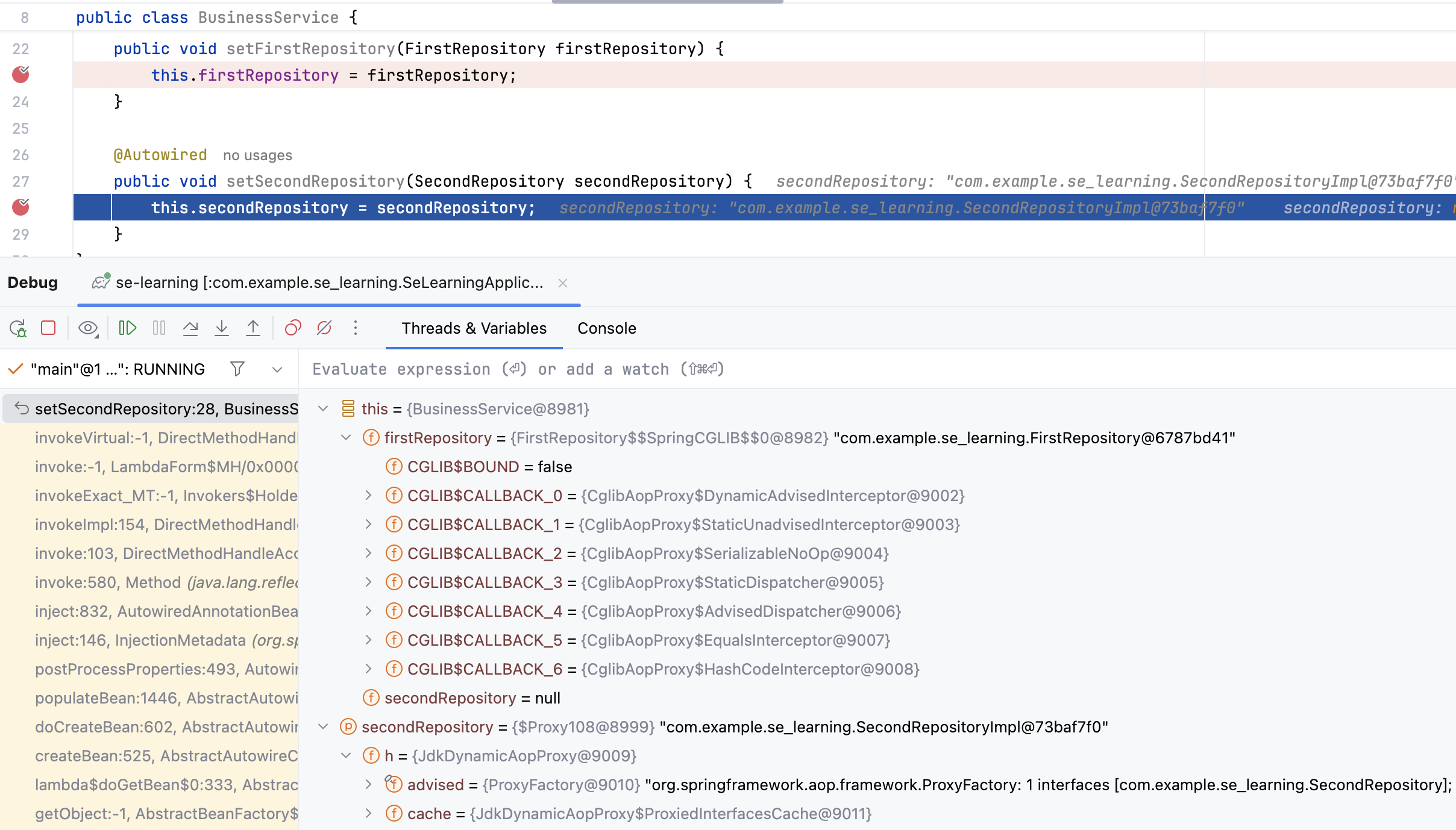
如上图所示,Spring通过运行时注入动态代理类的方式实现AOP,代理类的创建有两种方式:
- CGLIB库字节码生成创建目标类的子类,目标类无接口时只能使用此方式
- JDK动态代理通过Proxy和InvocationHandler创建代理类,只适用于目标类实现了接口的场景
原创声明:本文系作者授权腾讯云开发者社区发表,未经许可,不得转载。
如有侵权,请联系 cloudcommunity@tencent.com 删除。
目录
腾讯云开发者

Copyright © 2013 - 2026 Tencent Cloud. All Rights Reserved. 腾讯云 版权所有
深圳市腾讯计算机系统有限公司 ICP备案/许可证号:粤B2-20090059  粤公网安备44030502008569号
腾讯云计算(北京)有限责任公司 京ICP证150476号 | 京ICP备11018762号